
UN Clash with Frustrated Students Spills Into Camp
Inter Press News
By Ansel Herz
PORT-AU-PRINCE, May 25, 2010 (IPS) - United Nations peacekeeping troops responded to a rock-throwing demonstration by university students Monday evening with a barrage of tear gas and rubber bullets in the area around Haiti's National Palace, sending masses of displaced Haitians running out of tent camps into the streets, according to witnesses.
"That child was gravely injured in the face! It was miserable, they were throwing gas everywhere," said Junior Joel, a young man hanging with friends at night outside the palace - still partially collapsed from the January earthquake.
Three volunteer doctors from the NGO Partners in Health who were working in the emergency room of the General Hospital said they treated at least six individuals with wounds from rubber bullets.
"They were bleeding," Sarah McMillan, a doctor from New Hampshire, told IPS. "There was a little girl with a big laceration on her face. It needed about 10 stitches. She'll probably have a scar."
The girl was discharged from the hospital and could not be found in the tent camp as of publication time.
Thousands of families are crowded into the public squares in the Champs du Mars zone around the palace, after the earthquake killed at least 200,000 people and drove nearly two million from destroyed neighbourhoods.
A coalition of political organisations called Tet Kole, Haitian Creole for "Heads Together", has staged protests in the area for the past month, demanding the resignation of President René Préval over his handling of the post-earthquake crisis.
The walls of the Faculty of Ethnology school are dotted with graffiti denouncing Préval and the United Nations. Students said they gave Brazilian peacekeeping troops stationed in jeeps outside the campus the middle finger sign late Monday afternoon.
When the troops tried to enter the campus, angrily calling students thieves and vagabonds, the students showered them with rocks. As the soldiers fled, they fired three bullet rounds in the air and one of them struck the front-facing wall of the school, students said.
When the troops returned in bigger vehicles, Frantz Mathieu Junior said he ran to hide in a bathroom, but the soldiers kicked the thin wooden door open. Junior said he was forced to the ground and kicked repeatedly, then taken away. He says he was force-fed while in detention.
The students showed IPS on Tuesday the cracks in the wooden door and the bullet hole next to a second-storey window. After Junior was taken on Monday, they took to the streets in an angry protest, throwing more rocks.
Edmond Mulet, the head of the peacekeeping mission - known by the acronym MINUSTAH - issued a statement blaming an unnamed student for "the provocation" of throwing stones at a patrol, but apologising for the troops' intrusion on university grounds to seize him.
U.N. troops never fired any bullets or tear gas on Monday, said MINUSTAH spokesperson David Wimhurst. He said only pepper spray and rubber bullets were used to quell an out-of-control protest.
CNN crews heard gunshots, smelled tear gas and saw gas canisters littering the area surrounding the palace. According to witnesses from the surrounding tent camps, U.N. troops blanketed the area with tear gas and fired rubber bullets at 6 p.m. on Monday.
"Everyone ran because nobody wants to be around when there's so much gas," Joseph Marie-ange, a 24-year-old mother of four, told IPS. "They're abusive. They shot the gas in here and the children and elders were falling, everyone was feeling the effects."
Hours after the protests and swirling gas dissipated, Levita Mondesir trudged with her three-month-old baby towards the General Hospital's exit.
"We live in Place Petion, across from the Ethnology school," she told IPS. "The students came, then MINUSTAH released the gas. When I got back to the camp, everyone was running, so I ran too."
"I tried to cover my child and told the other children to lay down under the bed," she continued. "There was smoke and the kids and people were falling. My baby wasn't responding, I was worried he died. I was crying and others helped me take him to the hospital."
She caught a motorcycle taxi to the hospital and received a reserve ticket for her baby to be x-rayed the next day. Tines Clerge, her husband, said he can't continue living there now. "I can't stay at Chanmas anymore," he told IPS.
The opposition protests continued Tuesday afternoon in Chanmas. Scores of U.N. troops and Haitian police ringed the national palace with barricades. The demonstrators accuse President Préval of seeking to grab power by extending his mandate past the original end date. Parliament approved the extension.
Some are also upset with the Haiti Interim Recovery Commission, which directs the spending of nearly 10 billion dollars in aid money. A majority of the commission members are foreigners, though Préval has a final veto on all decisions.
"If they want to suppress the protest, why didn't they shoot the gas at the school where the students are?" asked Malia Villa, an organiser with the Haitian women's group KOFAVIV, who fled the Chanmas area Monday night. "How can they shoot it in the middle of the camp, where we have children and families? They say they're here for security in the country, but how can the government work with them now when they do this?"
"We can't continue to tolerate this anymore. It's revolting to us," she told IPS, throwing up her hands.
U.N. troops have been dogged by persistent accusations of abuse since their mission was established in 2004 after the ouster of Haitian President Jean-Bertrand Aristide.
Incidents occurred in 2008 and 2009 in which Haitian witnesses said troops recklessly fired their weapons, killing or injuring civilians, while MINUSTAH internal investigations cleared their troops of wrongdoing.
Further political demonstrations are scheduled for Thursday, according to opposition groups.
*Ansel Herz blogs at http://www.mediahacker.org.
Wednesday, May 26, 2010

Monday, May 24, 2010
Island Time
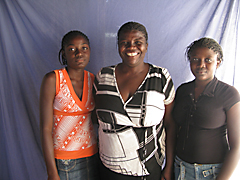
"Island Time," This American Life, National Public Radio (NPR), May 21, 2010 Four months after the earthquake in Haiti, Ira Glass talks to Haitian reporter Joseph-Romuald Felix while Romuald tours a tent camp in the Petionville suburb of Port au Prince. Romuald talks to four children -- two of them have eaten this day, two have not. Nan Buzard, who heads the American Red Cross effort in Haiti, tells Ira that relief agencies have to walk a thin line between helping too little and helping too much. More...
Friday, May 21, 2010
Al Jazeera English - Focus - Cuba's aid ignored by the media?

Cuba's aid ignored by the media?
By Tom Fawthrop in Havana
After the quake struck, Haiti's first medical aid came from Cuba [GALLO/GETTY]
Among the many donor nations helping Haiti, Cuba and its medical teams have played a major role in treating earthquake victims.
Public health experts say the Cubans were the first to set up medical facilities among the debris and to revamp hospitals immediately after the earthquake struck.
However, their pivotal work in the health sector has received scant media coverage.
SPECIAL REPORT
"It is striking that there has been virtually no mention in the media of the fact that Cuba had several hundred health personnel on the ground before any other country," said David Sanders, a professor of public health from Western Cape University in South Africa.
The Cuban team coordinator in Haiti, Dr Carlos Alberto Garcia, says the Cuban doctors, nurses and other health personnel have been working non-stop, day and night, with operating rooms open 18 hours a day.
During a visit to La Paz hospital in the Haitian capital Port-au-Prince, Dr Mirta Roses, the director of the Pan American Health Organisation (PAHO) which is in charge of medical coordination between the Cuban doctors, the International Committee of the Red Cross (ICRC) and a host of health sector NGOs, described the aid provided by Cuban doctors as "excellent and marvellous".
La Paz is one of five hospitals in Haiti that is largely staffed by health professionals from Havana.
History of cooperation
A Cuban doctor working in a Cuban field hospital in Haiti [Prensa Latina Cuba] Haiti and Cuba signed a medical cooperation agreement in 1998.
Before the earthquake struck, 344 Cuban health professionals were already present in Haiti, providing primary care and obstetrical services as well as operating to restore the sight of Haitians blinded by eye diseases.
More doctors were flown in shortly after the earthquake, as part of the rapid response Henry Reeve Medical Brigade of disaster specialists. The brigade has extensive experience in dealing with the aftermath of earthquakes, having responded to such disasters in China, Indonesia and Pakistan.
"In the case of Cuban doctors, they are rapid responders to disasters, because disaster management is an integral part of their training," explains Maria a Hamlin Zúniga, a public health specialist from Nicaragua.
"They are fully aware of the need to reduce risks by having people prepared to act in any disaster situation."
Cuban doctors have been organising medical facilities in three revamped and five field hospitals, five diagnostic centres, with a total of 22 different care posts aided by financial support from Venezuela. They are also operating nine rehabilitation centres staffed by nearly 70 Cuban physical therapists and rehab specialists, in addition to the Haitian medical personnel.
The Cuban team has been assisted by 100 specialists from Venezuela, Chile, Spain, Mexico, Colombia and Canada and 17 nuns.
Havana has also sent 400,000 tetanus vaccines for the wounded.
Eduardo Nuñez Valdes, a Cuban epidemiologist who is currently in Port-au-Prince, has stressed that the current unsanitary conditions could lead to an epidemic of parasitic and infectious diseases if not acted upon quickly.
Media silence
However, in reporting on the international aid effort, Western media have generally not ranked Cuba high on the list of donor nations.
One major international news agency's list of donor nations credited Cuba with sending over 30 doctors to Haiti, whereas the real figure stands at more than 350, including 280 young Haitian doctors who graduated from Cuba. The final figure accounts for a combined total of 930 health professionals in all Cuban medical teams making it the largest medical contingent on the ground.
Another batch if 200 Cuban-trained doctors from 24 countries in Africa and Latin American, and a dozen American doctors who graduated from Havana are currently en route to Haiti and will provide reinforcement to existing Cuban medical teams.
By comparison the internationally-renowned Médecins Sans Frontières (MSF or Doctors without Borders) has approximately 269 health professionals working in Haiti. MSF is much better funded and has far more extensive medical supplies than the Cuban team.
Left out
But while representatives from MSF and the ICRC are frequently in front of television cameras discussing health priorities and medical needs, the Cuban medical teams are missing in the media coverage.
Richard Gott, the Guardian newspaper's former foreign editor and a Latin America specialist, explains: "Western media are programmed to be indifferent to aid that comes from unexpected places. In the Haitian case, the media have ignored not just the Cuban contribution, but also the efforts made by other Latin American countries."
Brazil is providing $70mn in funding for 10 urgent care units, 50 mobile units for emergency care, a laboratory and a hospital, among other health services.
Venezuela has cancelled all Haiti debt and has promised to supply oil free of charge until the country has recovered from the disaster.
Western NGOs employ media officers to ensure that the world knows what they are doing.
According to Gott, the Western media has grown accustomed to dealing with such NGOs, enabling a relationship of mutual assistance to develop.
Cuban medical teams, however, are outside this predominantly Western humanitarian-media loop and are therefore only likely to receive attention from Latin American media and Spanish language broadcasters and print media.
There have, however, been notable exceptions to this reporting syndrome. On January 19, a CNN reporter broke the silence on the Cuban role in Haiti with a report on Cuban doctors at La Paz hospital.
Cuba/US cooperation
Cuban doctors received global praise for their humanitarian aid in Indonesia [Tom Fawthrop] When the US requested that their military planes be allowed to fly through Cuban airspace for the purpose of evacuating Haitians to hospitals in Florida, Cuba immediately agreed despite almost 50 years of animosity between the two countries.
Josefina Vidal, the director of the Cuban foreign ministry's North America department, issued a statement declaring that: "Cuba is ready to cooperate with all the nations on the ground, including the US, to help the Haitian people and save more lives."
This deal cut the flight time of medical evacuation flights from the US naval base at Guantanamo Bay on Cuba's southern tip to Miami by 90 minutes.
According to Darby Holladay, the US state department's spokesperson, the US has also communicated its readiness to make medical relief supplies available to Cuban doctors in Haiti.
"Potential US-Cuban cooperation could go a long way toward meeting Haiti's needs," says Dr Julie Feinsilver, the author of Healing the Masses - a book about Cuban health diplomacy, who argues that maximum cooperation is urgently needed.
Rich in human resources
Although Cuba is a poor developing country, their wealth of human resources - doctors, engineers and disaster management experts - has enabled this small Caribbean nation to play a global role in health care and humanitarian aid alongside the far richer nations of the west.
Cuban medical teams played a key role in the wake of the Indian Ocean Tsunami and provided the largest contingent of doctors after the 2005 Pakistan earthquake. They also stayed the longest among international medical teams treating the victims of the 2006 Indonesian earthquake.
In the Pakistan relief operation the US and Europe dispatched medical teams. Each had a base camp with most doctors deployed for a month. The Cubans, however, deployed seven major base camps, operated 32 field hospitals and stayed for six months.
Bruno Rodriguez, who is now Cuba's foreign minister, headed the mission - living in the mountains of Pakistan for more than six months.
Just after the Indonesian earthquake a year later, I met with Indonesia's then regional health co-coordinator, Dr Ronny Rockito.
Cuba had sent 135 health workers and two field hospitals. Rockito said that while the medical teams from other countries departed after just one month, he asked the Cuban medical team to extend their stay.
"I appreciate the Cuban medical team. Their style is very friendly. Their medical standard is very high," he told me.
"The Cuban [field] hospitals are fully complete and it's free, with no financial support from our government."
Rockito says he never expected to see Cuban doctors coming to his country's rescue.
"We felt very surprised about doctors coming from a poor country, a country so far away that we know little about.
"We can learn from the Cuban health system. They are very fast to handle injuries and fractures. They x-ray, then they operate straight away."
A 'new dawn'?
The Montreal summit, the first gathering of 20 donor nations, agreed to hold a major conference on Haiti's future at the United Nations in March.
Some analysts see Haiti's rehabilitation as a potential opportunity for the US and Cuba to bypass their ideological differences and combine their resources - the US has the logistics while Cuba has the human resources - to help Haiti.
Feinsilver is convinced that "Cuba should be given a seat at the table with all other nations and multilateral organisations and agencies in any and all meetings to discuss, plan and coordinate aid efforts for Haiti's reconstruction".
"This would be in recognition of Cuba's long-standing policy and practise of medical diplomacy, as well as its general development aid to Haiti," she says.
But, will Haiti offer the US administration, which has Cuba on its list of nations that allegedly "support terrorism", a "new dawn" in its relations with Cuba?
In late January, Hillary Clinton, the US secretary of state, thanked Cuba for its efforts in Haiti and welcomed further assistance and co-operation.
In Haiti's grand reconstruction plan, Feinsilver argues, "there can be no imposition of systems from any country, agency or institution. The Haitian people themselves, through what remains of their government and NGOs, must provide the policy direction, and Cuba has been and should continue to be a key player in the health sector in Haiti".
Heavy rains pound tent city in Haitian capital
Rains pound Haiti's quake-ravaged capital of Port-au-Prince where earthquake victims struggle with living conditions Watch this short video to see how people living in the 'tent cities' are surviving.
Wednesday, May 19, 2010
Sudan army battles Darfur rebels

NEWS AFRICA
Sudan army battles Darfur rebels
Jem took up arms against the Sudanese government in 2003 accusing it of marginalising Darfur [File: AFP]
Sudanese forces say they have seized control of a key rebel held area in the western Darfur region after killing more than 150 members of the Justice and Equality Movement (Jem).
"We have liberated Jebel Moon from the Justice and Equality Movement," Al-Sawarmi Khaled, an army spokesman, said on Saturday.
"We have detained 61 rebels and confiscated 16 cars and three large trucks."
The army gave no details of army casualties in the clashes.
The Sudanese government signed a framework peace pact with Jem in February, which was hailed by the international community as a major step towards bringing peace to Darfur after seven years of war.
But talks soon reached a stalemate and a deadline set for completing the peace deal passed on March 15 without agreement.
Police convoy 'attacked'
The latest fighting came after police said 27 police officers and 30 rebels had been killed on Thursday when Jem attacked a convoy in South Darfur.
IN DEPTH
Who are Sudan's Jem rebels?
Inside Story: Peace for Darfur?
Talk to Jazeera: Chad's president on Darfur peace
Videos:
Exclusive: Sudan's Jem rebels
Chad tribe holds cross-border sway
Parties sign Darfur truce deal
US envoy praises Darfur peace talks
According to police, Jem fighters "attacked a convoy carrying food destined for the citizens of Darfur but the attack was thwarted by central police forces who were protecting the convoy".
But Jem said it was acting in self-defence during Thursday's fighting.
"It is completely false. Our forces were defending themselves from attack by the army which has intensified its operations since the end of elections" in Sudan on April 15, Ahmed Hussein Adam, a Jem spokesman, told the AFP news agency.
The latest violence seems to have dealt a further blow to the already shaky peace talks between Jem and the government in Khartoum.
On Friday, Jem denied a UN mediator's claim that the group would resume the Qatari-brokered peace talks.
Adam said the group was actually leaning towards quitting the negotiations altogether.
"We are still suspending our participation in the negotiations, and we are closer to withdrawing from the negotiations in Qatar," he told the AFP news agency.
"We are in a true state of war after the government reneged on the ceasefire agreement."
'Ceasefire violated'
Jem has accused Sudan's military of attacking its positions last month, saying Khartoum was trying to impose a "military solution" to the conflict, which the United Nations estimates has killed 300,000 people.
Khartoum, which says 10,000 people have died since the rebels took up arms in 2003, denied that the offensive took place.
"If Jem wants to go back to war, the Sudanese army and police are all prepared and on alert to stop any offensive."
Ismail al-Haj Musa, NCP official
Ismail al-Haj Musa, a leading member of the Sudan's ruling National Congress Party, told Al Jazeera that claims that the government violated the ceasefire agreement were "absolutely untrue".
"We always hear such false allegations from Jem to justify its return to square one of war once again," he said.
"One can ask the UN and African Union observers on the ground to make sure who has first violated ceasefire. They will say that Jem has.
"If Jem wants to go back to war, the Sudanese army and police are all prepared and on alert to stop any offensive."
In another sign that peace efforts were deteriorating, Khartoum last week sought Interpol's helpin arresting Khalil Ibrahim, the Jem leader, over a 2008 attack near Khartoum that killed 220 people.
Army build-up
Unamid, a joint peacekeeping mission by the UN and the African Union, has said it has reports that Sudanese army and Jem fighters have been massing in North Darfur state's Shangil Tobay area.
Hundreds of refugees have fled a camp near El Fasher, a government stronghold and hub for aid workers and peacekeepers, as the rival forces gathered.
About 2.7 people have fled the fighting
in the Darfur s region since 2003
Approximately 70 per cent of the 2,000 people living in the New Shangil Tobay Camp had left fearing clashes, Unamid said in a statement on Wednesday.
Two international sources, speaking on condition of anonymity, told Reuters there were signs Jem was moving south east through Darfur towards the neighbouring region of South Kordofan, where it has attacked oilfields in the past.
Al-Tahir al-Feki, a Jem official, confirmed the group had troops around Shangil Tobay and South Kordofan but said they were on "administrative" missions, holding talks with local leaders.
Sudan's army earlier this month accused Jem of attacking villages in West and North Darfur states to expand its territory.
Jem was one of two rebel forces that launched a revolt against Sudan's government in 2003, accusing it of starving Darfur of funding and marginalising its population.
The desert region, which is the size of France, has been gripped by a civil war since then and about 2.7 million have been displaced, according to the UN.
Subscribe to:
Posts (Atom)

 Posts
Posts


